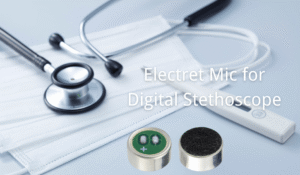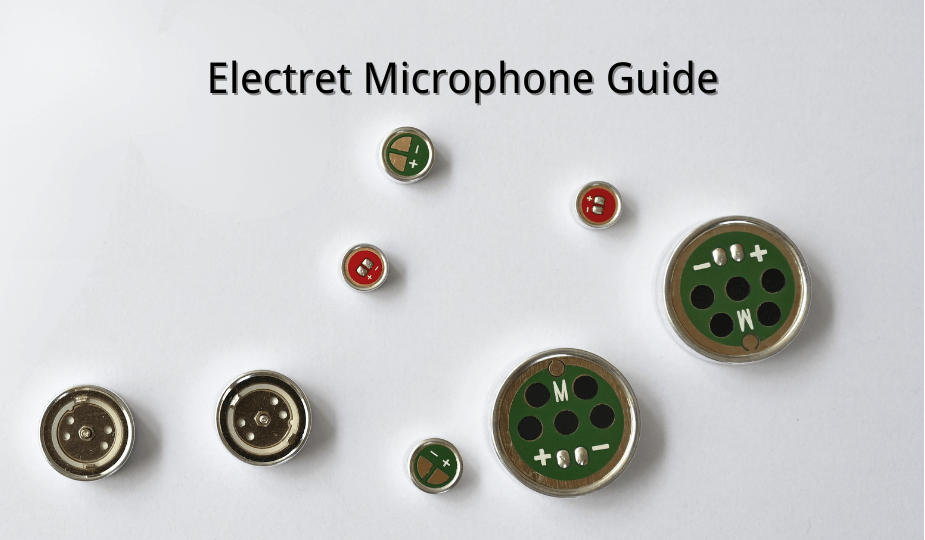
Electret microphones are widely used in modern electronics due to their compact size, high sensitivity, low power consumption, and excellent reliability. They are essential components in communication devices, recording systems, intercoms, and industrial equipment.
This complete guide explains electret microphone working principles, specifications, impedance, sensitivity, wiring, and design considerations for engineers and product developers.
What Is an Electret Microphone?
An electret microphone is a type of condenser microphone that uses permanently charged electret material instead of external polarization voltage.
This allows stable performance with low power consumption.
Read full explanation:
What Is an Electret Microphone
Electret Microphone Working Principle and Internal Structure
Electret microphones consist of a diaphragm, backplate, electret material, and internal FET transistor. Sound waves cause diaphragm movement, creating capacitance changes that generate electrical signals.
Detailed structure guide:
Structure of a Standard Omnidirectional Electret Microphone
Electret Microphone Sensitivity Guide
Sensitivity determines how efficiently a microphone converts sound into electrical signals.
Typical range:
- -24 dB (high sensitivity)
- -32 dB (standard)
- -44 dB (low sensitivity)
Engineering guide:
How to Choose the Sensitivity of Electret Microphones
Electret Microphone Impedance Guide
Impedance affects signal quality, noise resistance, and circuit compatibility.
Most electret microphones operate between 1kΩ and 2.2kΩ.
Technical guide:
Electret Microphone Impedance Guide
Electret Microphone Wiring and Circuit Integration
Proper wiring ensures stable performance and optimal signal output.
Wiring guide:
Electret Microphone Wiring Guide
Do Electret Microphones Need Phantom Power?
Electret microphones do not require traditional phantom power but need bias voltage to operate the internal FET.
Technical explanation:
Do Electret Microphones Need Phantom Power
Electret Microphone Self Noise and Signal Quality
Self-noise affects audio clarity, especially in low-level signal environments.
Testing guide:
Electret Microphone Capsule Self Noise Testing
Electret Microphone Packaging and Integration Options
Electret microphone capsules are available in various packaging formats including pin type, SMD, and wire leads.
Comparison guide:
Electret Microphone Packaging Guide
Applications of Electret Microphones
Electret microphones are used in:
Electret Microphone Capsules and Product Options
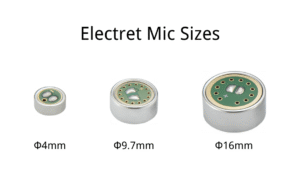
Electret microphone capsules are available in multiple sizes and specifications to support different applications.
Explore capsule options:
Electret Microphone Capsules
FAQ
What is an electret microphone?
An electret microphone is a condenser microphone that uses permanently charged electret material.
Do electret microphones require external power?
They require bias voltage but not traditional phantom power.
Why are electret microphones widely used?
Because they offer excellent performance, reliability, and low power consumption.
What is typical impedance of electret microphones?
Usually between 1kΩ and 2.2kΩ.
Conclusion
Electret microphones provide reliable, efficient, and high-quality audio capture. Understanding impedance, sensitivity, wiring, and capsule design ensures optimal performance in electronic devices.