When selecting an electret microphone, the capsule size is more than just an installation constraint. The diameter primarily determines the diaphragm area and the number and size of acoustic pickup holes, which together shape the microphone’s tonal character and frequency response.
Why Size Matters in Electret Microphones
Unlike internal electronics (JFET or MOSFET) that influence sensitivity and noise, microphone size mainly affects its acoustic properties. Key aspects influenced by size include:
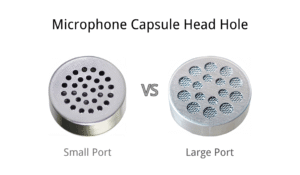
- Pickup holes: Number and diameter control how sound enters the capsule, affecting high-frequency extension and dynamic response.
- Diaphragm: Larger diaphragms provide richer low-frequency response, while smaller diaphragms respond faster at higher frequencies.
- Acoustic cavity: Larger housings allow better internal cavity design, further shaping frequency curve and tonal balance.
In short, capsule size is directly linked to the combination of pickup hole arrangement, diaphragm area, and resulting tonal characteristics.
How Pickup Hole and Diaphragm Affect Sound
Small Microphones (3mm–6mm)
– Small diaphragms with limited pickup hole area.
– Sound tends to be focused and “tight,” emphasizing mids and highs, but low-frequency extension is limited.
– Ideal for ultra-compact devices such as wearables, hearing aids, and IoT products.
Medium Microphones (8mm–10mm)
– Balanced diaphragm size and pickup hole layout.
– Provide a natural tonal balance and more even frequency response.
– Common in headsets, intercoms, and communication devices, offering a compromise between audio quality and compact design.
Large Microphones (14mm–25mm)
– Large diaphragms and generous pickup holes allow greater airflow.
– Deliver fuller lows, extended highs, and wider dynamic range.
– Perfect for professional audio applications, studio recording, and high-fidelity sound capture.
Choosing the Right Microphone Size
Step-by-step guide to selecting the appropriate size based on device space and tonal requirements:
- Step 1 – Check available space: For compact devices, 3–6mm capsules are usually recommended.
- Step 2 – Determine tonal needs: For richer low frequencies or broader dynamic response, select larger diaphragms (8–25mm).
- Step 3 – Consider pickup hole design: More or larger holes allow better air movement, improving frequency response and dynamics.
- Step 4 – Balance space and acoustic performance: Choose the smallest size that meets your sound quality requirements.
Electret Microphone Sizes and Typical Applications
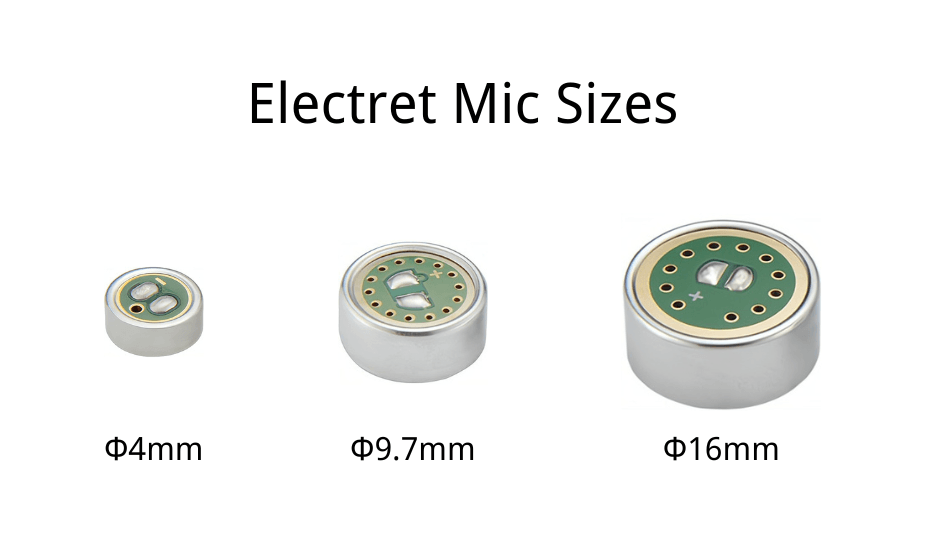
| Diameter | Pickup Hole & Diaphragm | Typical Application |
|---|---|---|
| 3mm | Small diaphragm, minimal pickup holes | Wearables, hearing aids, compact IoT |
| 4mm | Small diaphragm, slightly larger holes | Smart glasses, mini consumer electronics |
| 5.8mm | Moderate diaphragm, balanced hole area | Smartphones, voice assistants |
| 6mm | Moderate diaphragm, standard holes | Communication devices, tablets |
| 8mm | Large diaphragm, generous holes | Headsets, intercom systems |
| 9.7mm | Large diaphragm, optimized holes | Professional headsets, voice recognition |
| 10mm | Large diaphragm, wider holes | Conference and communication devices |
| 14mm | Very large diaphragm, wide air openings | High SPL applications, broadcast microphones |
| 16mm | Very large diaphragm, maximum airflow | Professional studio microphones |
| 25mm | Extra-large diaphragm, multiple wide pickup holes | Studio condenser microphones, high-fidelity recording |
Other Considerations
- Directionality: Omni, Uni, or Bi affects which sound sources are captured.
- Electrical characteristics: Internal JFET or MOSFET affect sensitivity and noise, independent of physical size.
- Installation constraints: PCB space, mounting, and acoustic isolation.
Conclusion
Electret microphone size plays a critical role in determining pickup hole layout, diaphragm area, and tonal characteristics. While internal electronics control sensitivity and noise, the physical size shapes the sound curve and color. Selecting the right diameter ensures a balance between installation space and desired audio performance. To explore how capsule diameter affects diaphragm size and pickup hole layout, refer to our Electret Microphone Capsule Head Hole Guide.