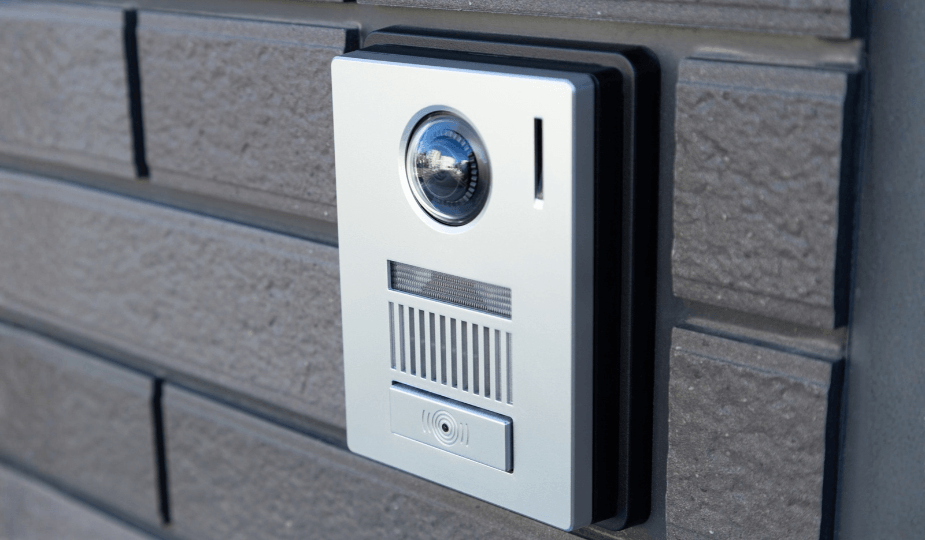
Building intercom systems are widely used in residential communities, office buildings, apartment complexes, and commercial properties. Their microphones must capture speech clearly while operating in different installation environments, including indoor entrances and outdoor access-control panels.
For intercom manufacturers, microphone capsule selection involves several factors beyond sensitivity. Directivity, waterproof requirements, sound inlet design, background noise, electrical compatibility, and installation space all influence the final communication quality.
This guide explains the main considerations when selecting microphone capsules for building intercom and door-entry systems.
1. Identify the Intercom Application
Different intercom devices have different acoustic and environmental requirements. The first step is to identify where the microphone will be installed and how the system will be used.
- Residential entrance panels: Capture speech from visitors standing near the building entrance.
- Apartment door stations: Support close-range communication between visitors and residents.
- Commercial building access panels: Operate in environments with people, traffic, and other background sounds.
- Indoor intercom terminals: Support two-way voice communication in apartments, offices, and reception areas.
- Outdoor access-control systems: Require consideration of rain, humidity, dust, and temperature changes.
These applications may use similar microphone technologies, but the required capsule configuration and environmental protection can differ.
2. Choose the Appropriate Microphone Directivity
Directivity determines how a microphone responds to sound arriving from different directions. For building intercom systems, the choice should reflect the expected speaker position and the physical arrangement of the device.
Omnidirectional microphone capsules
An omnidirectional capsule picks up sound from multiple directions. It can be suitable for door-entry panels where visitors may stand at slightly different positions relative to the microphone.
This configuration offers flexibility in microphone placement, although it may also capture surrounding traffic, wind, and other unwanted sounds. The microphone opening and the overall device design should be considered when evaluating the final audio performance.
Unidirectional microphone capsules
A unidirectional capsule emphasizes sound from a preferred direction. It may be useful when the speaking position is clearly defined and the microphone can be installed with a suitable orientation.
Its actual performance depends on the capsule, enclosure, sound inlet, and mounting position. Directional performance should therefore be verified after integration into the intercom housing.
3. Waterproof Requirements for Outdoor Intercoms
Outdoor building intercom panels are often installed near entrances where they may be exposed to rain, humidity, and dust. These conditions make environmental protection an important part of microphone selection.
Waterproof microphone capsules
A waterproof microphone capsule can be considered when the microphone assembly needs protection against moisture exposure. The capsule’s protection characteristics should match the intended application and installation conditions.
However, a waterproof capsule does not automatically make the complete intercom device waterproof. The sound inlet, protective membrane, enclosure joints, cable openings, drainage design, and assembly process also affect the finished product’s protection level.
Sound inlet and protective structure
Protective structures should be designed to limit water entry without unnecessarily obstructing sound. The opening size, protective membrane, internal cavity, and distance between the external panel and microphone capsule can influence the acoustic response.
For this reason, microphone performance should be checked after installation in the final intercom enclosure.
4. Manage Background Noise and Speech Clarity
Building entrances can be acoustically challenging. Nearby roads, passing vehicles, conversations, ventilation equipment, and wind may affect voice pickup.
When evaluating a microphone capsule, consider the following parameters:
- Sensitivity: Match the capsule output level to the expected speaking distance and audio circuit.
- Signal-to-noise ratio: Consider microphone self-noise together with noise introduced by the preamplifier and other circuit components.
- Frequency response: Evaluate whether the response supports clear voice communication.
- Maximum sound pressure level: Ensure that expected sound levels do not cause unacceptable distortion.
- Directivity: Match the pickup pattern to the position of the person speaking.
Increasing microphone sensitivity does not automatically improve speech intelligibility in noisy environments. Microphone position, enclosure design, circuit performance, and audio processing must also be considered.
5. Consider Installation Space and Mechanical Design
Intercom manufacturers often need to integrate the microphone into a relatively thin front panel. The available installation space can limit capsule dimensions and affect the sound inlet design.
Before selecting a capsule, review:
- Capsule dimensions: Confirm diameter, height, and clearance inside the housing.
- Mounting arrangement: Check whether the capsule can be held securely without unwanted mechanical contact.
- Sound inlet position: Ensure that the microphone opening is correctly aligned with the capsule.
- Protective components: Check the effect of membranes, mesh, and other protective materials on acoustic performance.
- Mechanical vibration: Consider possible vibration transmitted through the front panel or supporting structure.
The microphone should be evaluated in the actual intercom assembly because the housing and protective structure can change its acoustic characteristics.
6. ECM and MEMS Options for Building Intercom Systems
Electret condenser microphone (ECM) capsules and MEMS microphones are both potential options for building intercom designs. The appropriate choice depends on acoustic requirements, circuit architecture, available space, and production processes.
Electret condenser microphone capsules
ECM capsules may be suitable for intercom devices that use conventional microphone capsule formats. Manufacturers can evaluate available dimensions, directivity, sensitivity, frequency response, and environmental-protection configurations.
For outdoor door stations, a waterproof capsule configuration may be worth considering where moisture protection is required.
MEMS microphones
MEMS microphones may be considered for compact PCB-based intercom designs that prioritize low-profile integration or automated surface-mount assembly.
Interface type, power consumption, PCB layout, acoustic port design, and environmental protection should be reviewed before selecting a MEMS solution.
7. Electrical Compatibility and System Integration
A microphone capsule must work correctly with the intercom’s audio circuit. Electrical compatibility is therefore an important part of the selection process.
- Operating voltage: Confirm that the supply voltage is compatible with the selected microphone.
- Current consumption: Check the operating current against the device’s power budget.
- Impedance and circuit design: Verify compatibility with the input stage and intended signal path.
- PCB layout: Consider grounding, signal routing, and potential interference from nearby electronic components.
- Audio feedback: For two-way communication, evaluate the microphone together with speaker placement and echo-control processing.
In a finished intercom system, voice quality depends on the complete signal path rather than the microphone capsule alone.
8. A Practical Testing Process for Intercom Manufacturers
After selecting a potential microphone capsule, test it in the complete intercom housing under representative operating conditions.
A practical validation process can include:
- Acoustic testing: Measure sensitivity, frequency response, noise performance, and distortion.
- Speech testing: Evaluate voice pickup at different speaking distances and positions.
- Environmental testing: Verify the assembled device against its intended moisture, dust, and temperature requirements.
- Background-noise testing: Assess voice communication in representative entrance and outdoor environments.
- Integration testing: Check the effect of the front panel, sound inlet, protective components, and audio circuit.
- Production validation: Confirm that the selected capsule specification can be maintained consistently during manufacturing.
9. A Waterproof 9.7 mm Omnidirectional Microphone Capsule
For building intercom projects that require omnidirectional sound pickup and moisture protection at the capsule level, ECMIC offers a 9.7 mm waterproof omnidirectional microphone capsule.
Its omnidirectional pickup pattern can be considered for entrance panels and door-entry devices where visitors may speak from different positions. The waterproof configuration is also worth evaluating for outdoor intercom installations.
The final protection and acoustic performance depend on the complete device design, including the front panel, sound inlet, protective structure, and assembly process. Manufacturers should validate the finished intercom against their specific environmental and communication requirements.
View the product details: 9.7 mm Omnidirectional Waterproof Microphone Capsule.
For OEM and ODM projects, manufacturers can share their installation dimensions, electrical requirements, environmental conditions, and expected order quantity to evaluate product compatibility.
Conclusion
Microphone capsule selection for building intercom systems requires balancing speech pickup, directivity, environmental protection, installation space, and electrical compatibility.
For outdoor entrance panels, a waterproof omnidirectional capsule may be a suitable option when sound needs to be captured from multiple visitor positions. However, the complete intercom enclosure and audio circuit must also be designed and tested to achieve the required performance.
ECMIC supplies microphone capsules for OEM and ODM applications. Intercom manufacturers can share their project requirements to begin a technical evaluation.