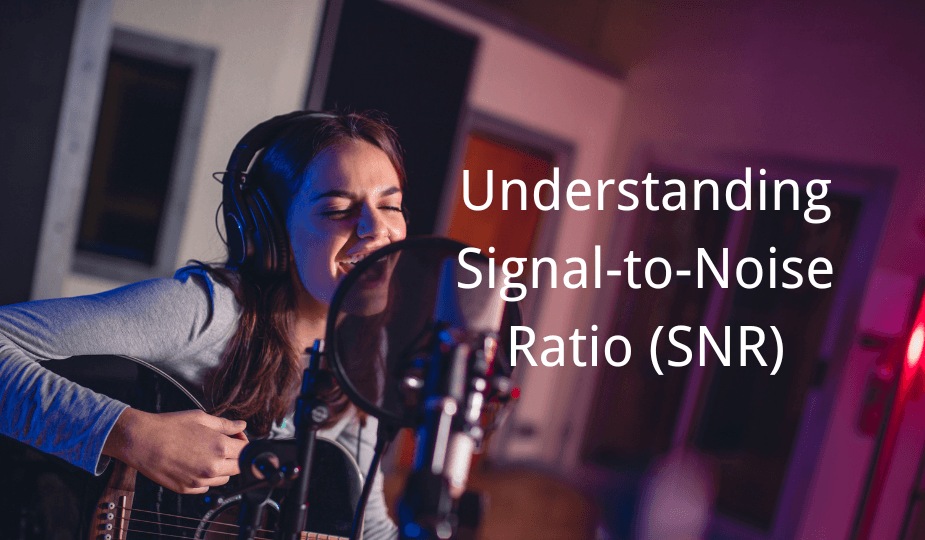
Signal-to-Noise Ratio (SNR) is one of the most commonly misunderstood specifications in electret microphone capsules. It is often confused with environmental noise performance, but in reality, it mainly describes the microphone’s own internal noise level under quiet conditions.
1. What SNR Actually Means
In electret microphone capsules, SNR refers to the relationship between the desired audio signal (such as human speech) and the microphone’s self-generated noise (also called self-noise or noise floor).
In simple terms: SNR tells you how quiet the microphone is when there is no sound around.
It does NOT describe how well the microphone performs in noisy environments such as engines, wind, or crowd noise.
2. Why SNR Mainly Matters in Quiet Environments
SNR becomes important when the environment is quiet or when the sound source is weak. In these situations, there is little or no external noise to mask the microphone’s own noise.
Typical scenarios where SNR matters:
- Studio voice recording
- Indoor speech recording
- Low-volume voice capture
- Audio post-production or gain amplification
In these cases, a low SNR microphone will produce noticeable background hiss or “air noise,” even when no one is speaking.
3. Why SNR Is Less Important in High-Noise Environments
In very noisy environments such as motorsports, aircraft, or industrial settings, the external noise level is significantly higher than the microphone’s self-noise.
This means the dominant noise source is no longer the microphone itself, but the environment. As a result, SNR becomes less relevant in determining speech clarity.
In these environments, speech intelligibility depends more on:
- Microphone placement (distance to mouth)
- Acoustic wind noise control
- System gain structure
- Digital noise reduction (DSP)
4. What SNR Does NOT Measure
A common misconception is that SNR represents noise resistance or noise cancellation performance. This is incorrect.
SNR does not measure:
- Wind noise suppression
- Engine or vehicle noise rejection
- Environmental noise isolation
- Echo or reverberation control
These factors are handled by system design, acoustic structure, and digital signal processing, not by SNR.
5. What Actually Determines Performance in Noisy Conditions
In real-world high-noise applications, microphone performance is mainly determined by system-level design rather than SNR alone.
Key factors include:
- Close-talk microphone positioning
- Wind noise protection materials and structure
- Proper gain staging in the audio chain
- Noise reduction algorithms
6. Summary
SNR in electret microphone capsules primarily describes how much self-noise the microphone produces in quiet environments. It is a useful indicator of recording cleanliness when external noise is low.
However, in noisy environments, speech clarity is dominated by physical placement and system-level noise processing, not the microphone’s SNR specification.
In short: SNR matters most when it is quiet. In loud environments, system design matters more than the microphone’s own noise level.