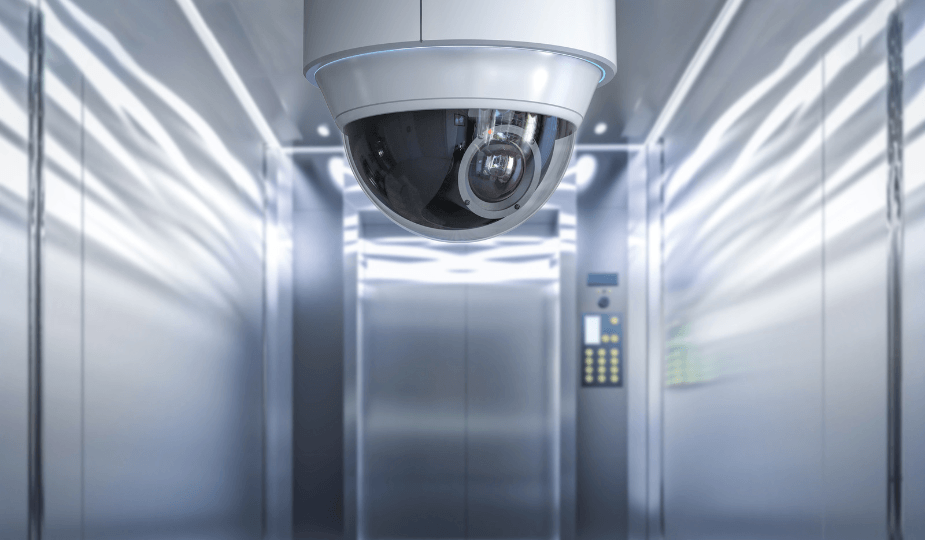
Elevator security cameras operate in a confined space where mechanical vibration, reflective surfaces, and background noise can affect audio capture. For camera manufacturers developing models with audio monitoring or two-way communication, microphone capsule selection should account for both acoustic performance and the way the microphone is installed inside the camera enclosure.
Electret condenser microphone (ECM) capsules are one option for compact security camera designs. However, clear audio in an elevator depends on more than the capsule itself. Mounting structure, sound inlet design, circuit noise, microphone placement, and signal processing all influence the final result.
1. Understand the Acoustic Challenges Inside an Elevator
An elevator cabin presents several challenges that differ from those in an ordinary office or corridor.
Mechanical Vibration
Elevators contain moving mechanical systems, and vibration can travel through structural components into the camera housing. If the microphone capsule or its supporting parts are mechanically coupled to a vibrating surface, the resulting signal may contain unwanted low-frequency noise.
The severity depends on the elevator, mounting location, camera structure, and operating conditions. A microphone selection process should therefore consider vibration transmission through the complete assembly rather than relying on the capsule specification alone.
Sound Reflections and Reverberation
Metal panels, glass, and other hard surfaces can reflect sound inside an elevator cabin. These reflections may reduce speech clarity, particularly when the speaker is some distance from the camera or when several people are talking.
Microphone placement and the intended pickup direction should be evaluated in the actual cabin environment. A capsule with an appropriate frequency response cannot eliminate reverberation by itself.
Background and Operational Noise
Motor operation, ventilation, door movement, and sounds from passengers can contribute to the recorded audio. The relevant noise sources vary between elevator designs and operating conditions.
Before choosing a capsule, define whether the camera is intended primarily for nearby speech, general ambient sound capture, or two-way communication. These applications may require different acoustic priorities.
2. Reduce Mechanical Vibration Through Microphone Mounting Design
For elevator cameras, mechanical integration deserves attention early in the design process. The mounting arrangement can influence how much vibration reaches the microphone and how the capsule responds acoustically.
A suitable silicone sleeve can provide a compliant interface around the microphone capsule, helping reduce mechanical vibration transmitted through the mounting structure. This makes a capsule with a silicone sleeve worth considering for elevator security cameras and other vibration-prone installations.
When evaluating the microphone mounting structure, consider the following factors:
- Silicone sleeve: The sleeve helps reduce mechanically transmitted vibration between the capsule and its mounting structure.
- Mounting fit: Check that the capsule is held securely without excessive compression or unwanted contact with the housing.
- Enclosure design: Avoid mounting arrangements that create unnecessary vibration paths to the capsule.
- Sound inlet: Ensure that the sleeve and housing do not obstruct the sound inlet or negatively affect acoustic performance.
The silicone sleeve helps reduce vibration transmission, but the result depends on the mounting arrangement and the vibration characteristics of the complete camera. Prototype testing under representative elevator operating conditions is recommended.
3. Choose the Appropriate Microphone Directivity
The required pickup pattern depends on the camera’s intended function and the position of the people or sounds of interest.
Omnidirectional Capsules
An omnidirectional capsule can be considered when the camera needs to capture sound from multiple directions inside the elevator cabin. This may suit general ambient monitoring or applications where people can speak from different positions.
The trade-off is that sound from outside the intended target area and unwanted cabin noise may also be captured. Microphone position, circuit noise, and audio processing should be evaluated together.
Unidirectional Capsules
A unidirectional capsule may be appropriate when the design has a clearly defined target direction, such as a specific speaking position. Its practical benefit depends on the capsule’s directional response and the way it is oriented inside the camera.
The final directional performance should be tested after the capsule is installed in the enclosure. A small sound inlet or nearby housing surface may alter the response compared with measurements taken in an open test setup.
4. Check Sensitivity, Noise, and Speech Performance
Microphone sensitivity should match the expected sound level, target pickup distance, and input characteristics of the camera’s audio circuit. Higher sensitivity does not automatically produce clearer speech, especially when mechanical noise or background sound is present.
During capsule selection, review the following parameters:
- Sensitivity: Confirm that the output level is appropriate for the target circuit and intended pickup distance.
- Signal-to-noise ratio: Evaluate capsule self-noise alongside noise introduced by the preamplifier and other circuit components.
- Frequency response: Check whether the response supports the required speech intelligibility or ambient sound capture.
- Maximum sound pressure level: Verify that expected sound levels will not cause unacceptable distortion.
- Electrical compatibility: Confirm operating voltage, current, and circuit requirements for the selected microphone type.
These specifications should be assessed in relation to the real application. For example, improving the capsule’s self-noise performance will not necessarily resolve vibration transmitted through the camera housing.
5. Consider ECM and MEMS Integration Requirements
Electret condenser microphone (ECM) capsules and MEMS microphones may both be considered for elevator security camera projects. The choice depends on acoustic targets, available space, circuit design, and manufacturing requirements.
An ECM capsule may suit a design that uses a conventional capsule format and has sufficient space for its mounting and electrical connections. Capsule dimensions, directivity, terminal configuration, and compatibility with the intended audio circuit should be confirmed during the design stage.
A MEMS microphone may be worth evaluating when a compact PCB-mounted solution or a specific electronic interface is required. Its power, interface, and PCB layout requirements must be compatible with the camera architecture.
Neither technology automatically eliminates vibration noise or reverberation. Those issues require appropriate mechanical design, acoustic integration, and system-level validation.
6. Validate the Complete Camera Under Realistic Conditions
Bench measurements of an individual capsule are useful, but they do not fully represent performance inside an elevator camera. Testing the complete assembly can reveal issues that are difficult to predict from component specifications alone.
A practical validation plan can include:
- Stationary cabin testing: Assess speech capture and background noise when the elevator is not moving.
- Operating-condition testing: Compare audio during travel, door operation, and other representative operating states.
- Vibration evaluation: Check for unwanted noise transmitted through the camera housing and mounting points.
- Speech intelligibility assessment: Test representative speaking distances and positions within the cabin.
- Installation verification: Confirm that the final sound inlet, protective components, and enclosure do not significantly degrade the required response.
- Production consistency: Verify that the selected capsule specification and assembly process meet the project’s repeatability requirements.
Testing should reflect the intended elevator environment and the camera’s actual function. If the device is intended for two-way communication, evaluate both the microphone capture path and the complete communication system.
7. Information to Prepare Before Requesting Microphone Samples
For security camera OEMs and ODMs, providing the basic design requirements helps a microphone supplier assess potential capsule options more efficiently.
- Intended function: ambient sound monitoring, speech capture, or two-way communication
- Available capsule dimensions and mounting space
- Preferred directivity and target pickup distance
- Required sensitivity, frequency response, and signal-to-noise ratio
- Audio circuit requirements and electrical interface
- Known vibration or background-noise conditions
- Prototype quantity and expected production volume
These details provide a starting point for evaluating capsule compatibility. Final suitability should be confirmed through testing in the intended camera design.
8. A 6 mm Waterproof Microphone Capsule with a Silicone Sleeve
For elevator security camera designs that require omnidirectional sound pickup, water protection at the capsule level, and a vibration-reducing mounting structure, ECMIC offers a 6 mm omnidirectional waterproof microphone capsule with a silicone sleeve.
The silicone sleeve helps reduce mechanical vibration transmitted through the mounting structure, making this configuration worth considering for cameras installed in vibration-prone environments such as elevator cabins. The compact format may also suit camera designs with limited installation space.
As with any microphone assembly, the final acoustic result depends on the enclosure, mounting arrangement, sound inlet, and audio circuit. Testing the complete camera under representative operating conditions helps confirm suitability for the application.
View the product details: 6 mm Omnidirectional Waterproof Microphone Capsule with Silicone Sleeve.
For OEM and ODM projects, share your installation dimensions, acoustic requirements, electrical specifications, and expected order quantity to evaluate product compatibility.
Conclusion
Microphone capsule selection for elevator security cameras requires attention to mechanical vibration, cabin reverberation, background noise, and limited installation space. The appropriate directivity and acoustic specifications should be chosen according to the camera’s intended function.
A microphone capsule with a silicone sleeve can help reduce mechanically transmitted vibration, while a waterproof design may be useful where moisture protection is required. These features should be evaluated alongside the camera’s mounting structure, sound inlet, and audio circuit.
ECMIC supplies microphone capsules for OEM and ODM applications. Manufacturers developing elevator security cameras can share their acoustic requirements, installation constraints, and project quantities to begin a technical suitability assessment.