When comparing microphone specifications from different suppliers, you may notice two things that can be confusing.
First, a microphone may be specified with a frequency response of 20Hz–20kHz, while the production test curve starts at 50Hz. Does this mean the microphone has no response below 50Hz?
Second, one supplier may specify sensitivity as -36dB, while another uses -56dB. Does the 20dB difference mean that one microphone is significantly more sensitive?
In both cases, the difference often comes from how the microphone is tested and how its specifications are expressed. Understanding these details can help you compare microphone specifications correctly and avoid unnecessary confusion during OEM and ODM projects.
1. Why Does the B&K Frequency Response Curve Start at 50Hz?
Many ECMIC omnidirectional ECMs are designed for a relatively flat and wide frequency response. Their specifications may cover a range such as 20Hz–20kHz.
However, when you look at a production frequency response report, you may find that the curve begins at 50Hz rather than 20Hz. This does not mean that the microphone stops responding below 50Hz.
1.1 Production Testing and Laboratory Testing Have Different Purposes
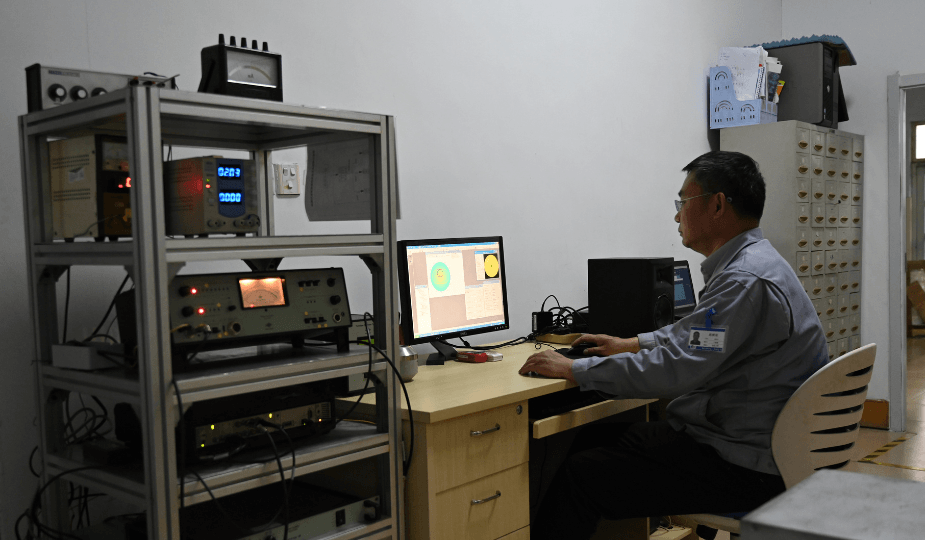
ECMIC uses professional B&K (Brüel & Kjær) acoustic testing systems for microphone performance testing.
In mass production, the test setup is optimized for stable, repeatable, and efficient measurements. Low-frequency measurements are more easily affected by mechanical vibration, equipment noise, ventilation systems, and other environmental factors.
For this reason, the frequency range used for routine production testing may start at 50Hz. The production test range should not be interpreted as the absolute frequency-response limit of the microphone itself.
1.2 What Does a Flat 50–100Hz Response Tell Us?
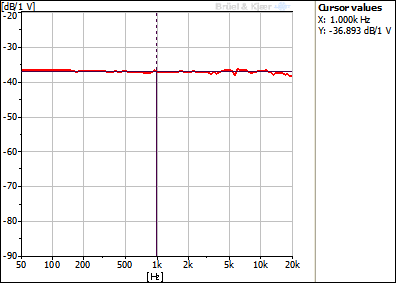
For omnidirectional ECMs designed for a relatively flat frequency response, the low-frequency response normally changes gradually rather than stopping abruptly at a specific frequency.
Based on ECMIC’s long-term production and acoustic testing experience, when the response curve remains stable and flat from approximately 50Hz to 100Hz, it generally indicates that the microphone’s low-frequency response extends well below this range.
In practical production experience, microphones with this type of response typically maintain a stable response through the 20–50Hz region as well.
This is an engineering judgment based on long-term production experience. It should not be interpreted as a substitute for direct measurement at every frequency point.
2. Why Does One Microphone Use -36dB While Another Uses -56dB?
Another common source of confusion is microphone sensitivity.
When comparing specifications from different manufacturers, you may see values such as -36dB, -44dB, -54dB, or -56dB. These values cannot be compared directly unless you first confirm the reference pressure used for the sensitivity specification.
2.1 Two Reference Systems Can Appear in the Market
Common modern microphone specifications express sensitivity relative to 1V/Pa. Some older specifications may use 1V/μbar as the reference.
- Common modern reference: dB re 1V/Pa
- Traditional reference: dB re 1V/μbar
The difference between these two values comes from the reference pressure, not from a sudden 20dB difference in the actual microphone output.
2.2 The Conversion Between Pa and μbar
The relationship between the two pressure units is:
1 Pa = 10 μbar
Because a factor of 10 in pressure corresponds to 20dB, the sensitivity values can be converted as follows:
dB re 1V/Pa = dB re 1V/μbar + 20dB
For example:
-56dB re 1V/μbar = -36dB re 1V/Pa
For an OEM project, an existing microphone BOM may specify a sensitivity of -56dB re 1V/μbar, while a new supplier provides a specification of -36dB re 1V/Pa. The two values may represent the same sensitivity level.
The 20dB difference comes from the different reference pressures, not from a difference in the microphone’s actual sensitivity.
2.3 Why Can the Older μbar Reference Still Be Found?
The 1V/μbar reference is much less common in modern international microphone specifications, but it has not completely disappeared.
Some established acoustic manufacturers, particularly companies working with older product designs, legacy BOMs, or historical testing specifications, may still use the traditional μbar-based sensitivity reference.
This can create confusion when an OEM customer compares a new supplier’s specification with an existing microphone specification.
Understanding the reference system helps engineers and purchasing teams align specifications before comparing products or approving samples.
3. Always Check the Reference Before Comparing Microphone Specifications
When comparing microphone specifications from different suppliers, the numerical value alone is not enough.
For frequency response, check the tested frequency range and understand whether the curve represents routine production testing or a full laboratory measurement.
For sensitivity, always check the reference pressure and unit before comparing dB values.
| Specification | Reference | Example |
|---|---|---|
| Common modern sensitivity reference | 1V/Pa | -36dB re 1V/Pa |
| Traditional sensitivity reference | 1V/μbar | -56dB re 1V/μbar |
| Conversion | 1 Pa = 10 μbar | -56dB re 1V/μbar = -36dB re 1V/Pa |
4. What This Means for OEM and ODM Projects
Specification differences between microphone suppliers do not always indicate differences in actual product performance.
A frequency-response curve starting at 50Hz may reflect the configuration of a routine production test rather than the microphone’s actual low-frequency capability. Likewise, a 20dB difference in sensitivity values may simply result from different reference pressure standards.
For OEM and ODM projects, the most reliable approach is to compare the complete test conditions, reference standards, sensitivity units, frequency-response requirements, and application requirements together.
At ECMIC, we work with customers to clarify these specification differences before sample approval and mass production. If your existing microphone specification uses a different sensitivity reference or requires a specific frequency-response test range, our engineering team can help align the parameters and testing conditions.
Conclusion
Understanding microphone specifications requires more than comparing numbers on a datasheet.
The starting frequency of a B&K production test curve does not necessarily define the microphone’s actual low-frequency response. Similarly, -36dB and -56dB should not be compared directly without checking their reference standards.
By understanding the test conditions and measurement references behind the specifications, OEM customers can make more accurate supplier comparisons and avoid unnecessary specification mismatches during microphone development.