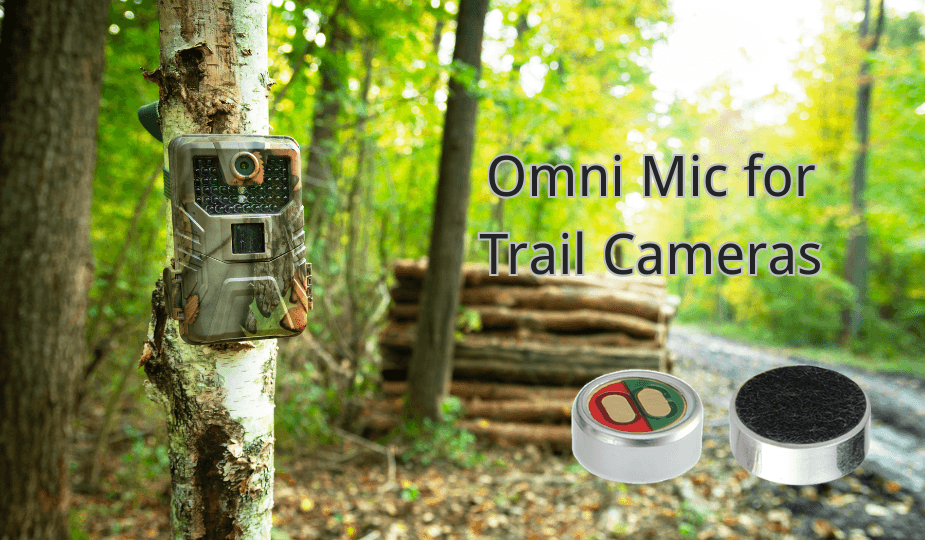
Modern trail cameras are no longer limited to photo and video capture. For hunting brands, wildlife researchers, and outdoor surveillance manufacturers, audio recording has become increasingly important in identifying animal behavior and environmental activity.
The 4mm omnidirectional electret microphone capsule is designed for compact audio pickup applications requiring low power consumption, stable environmental sound capture, and flexible integration into space-constrained outdoor devices.
From deer movement in forests to bird calls at dawn, the microphone capsule inside a trail camera directly affects how much useful information can be captured in the field.
In compact battery-powered hunting cameras, selecting the right microphone is not only about sound quality — it is also about size, power consumption, environmental adaptability, and acoustic tuning.
Why Audio Matters in Trail Cameras
Wildlife activity is often detected by sound before it becomes visible.
In real outdoor scenarios, trail camera microphones may need to capture:
- Deer footsteps on dry leaves
- Wild boar movement in bushes
- Bird calls in forests
- Coyotes howling at night
- Tree branch cracks
- Human movement near monitoring areas
- Environmental ambience for research purposes
Unlike directional microphones used in filmmaking, trail cameras commonly use omnidirectional microphone capsules because they need to capture environmental sound from multiple directions.
Key Microphone Selection Criteria for Trail Cameras
1. Compact Size for Slim Camera Design
Modern trail cameras are becoming smaller and thinner.
A compact microphone allows:
- Smaller housing structures
- Flexible PCB layout
- Better internal antenna placement
- Reduced interference with IR modules and batteries
The ECM-B4015AL30 uses a compact 4 × 1.5 mm structure, making it suitable for ultra-compact trail camera designs and space-constrained outdoor monitoring devices.
2. Low Power Consumption for Battery Operation
Trail cameras may remain in standby outdoors for weeks or months. Power efficiency is therefore extremely important.
The ECM-B4015AL30 operates at:
- 300 μA current consumption
- 2 Vdc operating voltage
This helps reduce battery drain in solar-powered and battery-powered wildlife monitoring systems.
3. Omnidirectional Pickup for Environmental Audio
In forests and outdoor environments, animals rarely move in a fixed direction toward the camera.
An omnidirectional microphone can capture:
- Ambient forest sound
- Animal movement from multiple angles
- Environmental acoustic information
- Surrounding outdoor activity
The ECM-B4015AL30 features:
- Omnidirectional directivity
- Sensitivity: -30 dB ±2
- S/N ratio: 60 dB
providing balanced environmental sound pickup while maintaining a compact form factor.
4. Frequency Response Tuning for Wildlife Sound Capture
One overlooked factor in trail camera microphone design is frequency tuning.
Different animals and outdoor activities generate sound energy in different frequency ranges.
| Animal / Sound Source | Typical Frequency Characteristics |
|---|---|
| Deer footsteps on leaves | Low-mid frequency |
| Grass and bush movement | Mid frequency |
| Bird chirps and calls | Mid-high frequency |
| Insect ambience | High frequency |
| Branch cracks | Mid-high transient frequency |
| Human voices and movement sounds | Mid-frequency dominant |
The ECM-B4015AL30 features a frequency response of 50 Hz – 16 kHz, with a carefully shaped acoustic curve:
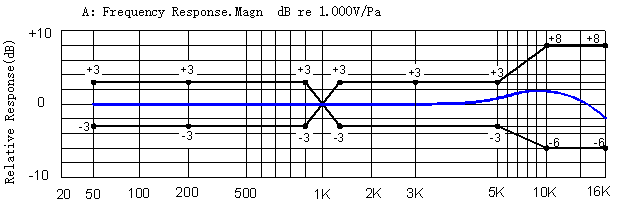
- 50 Hz – 4 kHz: Relatively flat response for natural environmental sound pickup
- 4 kHz – 10 kHz: Gradual rise that improves clarity of bird chirps, leaf movement, and small animal activity
- Above 10 kHz: Controlled roll-off that helps reduce wind noise and high-frequency artifacts in outdoor environments
This tuning helps trail camera systems maintain environmental detail while avoiding overly harsh high-frequency reproduction in outdoor recording conditions.
5. Acoustic Integration in Outdoor Camera Systems
Outdoor recording environments present additional acoustic challenges beyond basic microphone specifications.
In compact trail camera systems, microphone performance can also be affected by:
- Housing resonance
- Wind turbulence around microphone openings
- IR LED placement
- Internal PCB vibration
- Acoustic port structure
Small microphone capsules with stable mid-high frequency performance are often easier to integrate into compact outdoor camera housings while maintaining consistent audio pickup.
Why Electret Microphone Capsules Are Still Used in Trail Cameras
Although MEMS microphones are increasingly common in consumer electronics, electret microphone capsules remain widely used in hunting cameras and wildlife monitoring systems because they offer:
- Stable analog output
- Cost efficiency for mass production
- Mature acoustic tuning flexibility
- Reliable outdoor environmental performance
- Simple integration into analog audio circuits
For many OEM trail camera projects, compact electret capsules still provide a practical balance between size, sensitivity, integration flexibility, and overall system cost.
Recommended Applications
- Trail cameras
- Hunting cameras
- Wildlife monitoring systems
- Outdoor surveillance equipment
- Forest acoustic monitoring
- Battery-powered recording devices
- Compact security cameras
- Environmental sound collection systems
ECM-B4015AL30 Specifications
Below are the main specifications of the omnidirectional electret microphone capsule for compact outdoor audio devices .
| Parameter | Specification |
|---|---|
| Model | ECM-B4015AL30 |
| Dimensions | 4 × 1.5 mm |
| Directivity | Omnidirectional |
| Sensitivity | -30 dB ±2 |
| Impedance | 2.2 kΩ |
| S/N Ratio | 60 dB |
| Max SPL | 110 dB |
| Operating Voltage | 2 Vdc |
| Frequency Response | 50 Hz – 16 kHz |
| Response Characteristic | Flat 50–4kHz, Rise 4–10kHz, Roll-off Above 10kHz |
| Current Consumption | 300 μA |
Final Thoughts
As trail cameras evolve from simple motion-triggered devices into intelligent environmental monitoring systems, audio performance is becoming increasingly important.
Selecting the right microphone capsule can significantly improve:
- Wildlife detection capability
- Environmental awareness
- Outdoor recording clarity
- Overall monitoring performance
For compact trail camera systems requiring balanced environmental pickup, low power consumption, and enhanced mid-high frequency detail, the ECM-B4015AL30 provides a practical microphone solution for modern outdoor monitoring devices.
Learn more about this omnidirectional electret microphone capsule for compact outdoor audio devices .